
Some of the links below are affiliate links. If you buy through them I earn a small commission at no extra cost to you. Full disclosure here.
A surf rash guard is the cheapest bit of kit that will genuinely change how long you can stay in the water. Not the most exciting purchase you’ll ever make, I’ll grant you. But when you’re face-down in a shorebreak for three hours with the Queensland sun on the back of your neck, it’s the one thing you’ll be glad you bought.
Here’s what actually matters in one, and which ones are worth your money.
Why a Surf Rash Guard Matters More When You’re Bodysurfing
Most rash guard advice is written for board surfers. That’s fine as far as it goes, but bodysurfing puts different demands on a shirt, and the differences are worth knowing before you spend money.
Board surfers wear a rash guard mainly to stop wax rash on the chest and ribs. No board means no wax, so that problem disappears. What replaces it is worse in some ways. You’re in the water rather than on top of it, which means more sun on your back and shoulders for longer, and a lot more contact with sand.
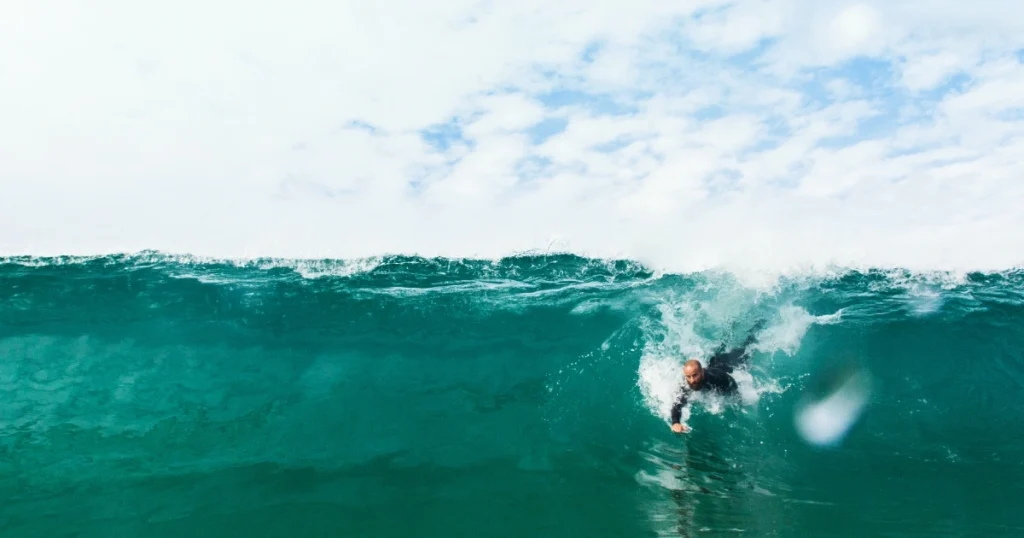
Shorebreak is the real culprit. When a wave dumps you on a sandbank, you go across it chest-first. Do that twenty times in a session and bare skin gets raw fast. A surf rash guard takes that abrasion instead of you.
Then there’s the sun angle. Bodysurfing means looking down the line with your face in the water, so your back, shoulders and the back of your neck cop it for the entire session. That’s exactly where most people miss with sunscreen, and exactly where a shirt does the job without needing reapplying every two hours.
One more thing. If you use a hand plane, the strap chafes the inside of your wrist and forearm. Long sleeves sort that out completely.

Quick Comparison
| Rash Guard | Best For | Fit | UPF |
|---|---|---|---|
| O’Neill Basic Skins | Overall value | Tight | 50+ |
| O’Neill Premium Skins | Wearing under a wetsuit | Tight | Not stated |
| Quiksilver Sun Tee Hooded | Long sun-heavy sessions | Regular | 50 |
| Roxy Compression Fit | Women, all round | Tight | 50+ |
| G Gradual Long Sleeve | Budget buy | No stretch | 50+ |
The Best Surf Rash Guards for 2026
Fair warning on how I’ve put this list together. I’ve worn a lot of rash guards over the years and I know what fails in surf, but I haven’t personally worn every model here. Where I’m going on specs, construction and independent testing rather than my own sessions, I’ll say so. I don’t quote prices, because they move around weekly and a page full of stale numbers is worse than none at all. Check the listing for what it costs today.
1. O’Neill Basic Skins Long Sleeve – Best Overall
If you want one recommendation and no fuss, this is it. UPF 50+, 87% polyester and 13% spandex, tight fit, long sleeves. It has been the default surf rash guard in surf shops for years for a reason.
The fit is the important part. It’s cut properly snug, so it doesn’t balloon when you duck under a set and it doesn’t ride up your ribs every time you get rolled. That matters more in bodysurfing than in almost any other water sport, because you’re getting turned over constantly.
It’s not fancy. The fabric is fairly ordinary polyester and it won’t feel as soft as something twice the price. But it does the job, it lasts, and it’s cheap enough that you won’t cry if the shorebreak eventually shreds it.
Best for: Almost everyone. Start here.
Where to buy: Check Amazon for prices.
2. O’Neill Premium Skins – Best Under a Wetsuit
The step up from the Basic Skins is mostly in the fabric and the seams. It’s 91% nylon rather than polyester, which feels noticeably softer against skin, and the seams face outward.
Outward-facing seams sound like a detail nobody needs. They aren’t. If you’re layering under a wetsuit in winter, an inward seam sitting under neoprene for two hours will rub you raw across the shoulders. This is the one to get if you surf through the cold months.
Best for: Wearing under a wetsuit, or anyone who finds polyester scratchy.
Where to buy: Check Amazon for prices.
3. Quiksilver Sun Tee Hooded – Best for Long Sessions
The hood is the whole argument for this one. Bodysurfing keeps your head down and your neck exposed for the entire session, so the back of the neck and the tops of the ears burn before anything else does. They’re also the two spots you can’t solve with a hat, because you’re not wearing a hat in the surf.
UPF 50, 89% polyester with 11% spandex, cut regular rather than loose. That spandex content is the bit worth noticing. Most hooded sun shirts are 100% polyester, which is exactly why they hang off you like a tent and fill up the moment you go under. This one has enough stretch to sit close.
Be clear-eyed about the trade-off. A hood adds drag, and when a wave rolls you it fills and pulls back against your throat. On a long, sunny, mellow session that’s a fair price for not cooking your neck. In heavy shorebreak, wear the plain long sleeve instead.
Best for: Long summer sessions, fair skin, anyone who burns through the back of the neck.
Where to buy: Check Amazon for prices.
4. Roxy Long Sleeve Compression Fit – Best Women’s Rash Guard
Roxy have been cutting women’s surf gear long enough to have the shape sorted, and that is most of what you’re buying here. A women’s rash guard that sits properly through the shoulders and doesn’t ride up over the hips is worth more in the water than any number on the fabric label.
UPF 50+, 86% polyester with 14% elastane, and cut as a compression fit rather than a relaxed one. That elastane figure is on the high side for a rash guard, and it shows in how the shirt behaves: it holds its shape when you’re getting rolled instead of stretching out and staying that way. Of everything on this list, it’s the closest match to what the fit section below argues for.
It’s also the most reviewed shirt here by a long way, which counts for something on its own. A lot of surf apparel on Amazon has three dozen reviews and no track record behind it. This one doesn’t have that problem.
Best for: Women who want one shirt that holds up in the surf, not just at the pool.
Where to buy: Check Amazon for prices.
5. G Gradual Sun Protection Long Sleeve – Best Budget Buy
If you’re not yet sure you’ll use one often enough to justify spending more, start here. It’s the cheapest shirt on this list by a wide margin, and it carries well over a thousand reviews. Nothing else here comes close on that.
UPF 50+, 100% polyester, crew neck, long sleeve, sizes S through 3XL.
Be straight about what you’re giving up, because it’s the thing this whole page keeps coming back to. Polyester with no elastane in it has no real stretch, so it drapes looser than the O’Neill and it won’t hold against you the same way when a wave turns you over. On a mellow beach break you’ll barely notice. In heavy shorebreak you will, and that’s the difference between a budget shirt and a surf one.
Buy it, use it for a season, and upgrade if you find yourself reaching for it every time you go down the beach. At this price, if you don’t, you’ve lost very little.
Best for: Trying one out for a season without committing.
Where to buy: Check Amazon for prices.
How to Choose a Surf Rash Guard
Fit: tight, not loose
For bodysurfing this is the single biggest call you’ll make. A tight surf rash guard sits against you and stays there. A loose one fills with water, drags on every kick, and rides up around your chest the first time a wave rolls you.
It should feel snug but not restrictive. If you can’t get a full arm stroke without it pulling across your shoulders, go up a size.
UPF, and why the Australian rating means more
UPF 50+ blocks roughly 98% of UV. Anything rated below UPF 30 is not really doing a protective job, whatever the marketing says.
Worth knowing if you’re buying in Australia: our sun protective clothing standard, AS/NZS 4399, is administered by ARPANSA and is stricter than most overseas equivalents. It requires garments to be tested in a stretched and wet state, which is exactly how a rash guard is worn. A UPF number tested dry and slack flatters the fabric. Ours doesn’t.
Seams
Look for flatlock seams, which sit flat against the skin instead of standing proud. Overlapped seams are what give you a raw stripe under the armpits after a long session. If you’re layering under neoprene, outward-facing seams are better again.
Sleeve length
Long sleeves for bodysurfing, nearly always. You get shoulder coverage where the sun is worst, and forearm coverage where a hand plane strap rubs. Short sleeves are more comfortable in genuinely hot water and fine for shorter swims, but you’re giving up the two areas that need it most.
New to all this? Start with what bodysurfing actually involves and come back to the gear.
Making It Last
Rinse it in fresh water the moment you’re out. Salt is what kills the elastane, and a rash guard left balled up wet in a car boot will lose its shape in a season.
Hand wash with mild soap. No bleach, no fabric softener, and never put it in a dryer. Heat destroys the stretch fibres and degrades the UPF treatment. Hang it in the shade, because ironically enough, drying it in full sun will wear it out faster.
Frequently Asked Questions
Do I need a surf rash guard for bodysurfing?
You don’t need one, but it’s the highest value bit of kit you can buy for bodysurfing. Sun exposure and sand abrasion are the two things that end bodysurfing sessions early, and a rash guard deals with both. If you’re only ever in the water for twenty minutes, skip it. For anything longer, get one.
Can I wear a rash guard instead of sunscreen?
For the skin it covers, yes, and it does the job better because it doesn’t wash off or need reapplying. You still need sunscreen on your face, neck, hands and legs. A rash guard is not a substitute for sun sense, just a very good part of it.
What’s the difference between a rash guard and a swim shirt?
Fit, mostly. A rash guard is cut tight to sit against the skin and reduce drag. A swim shirt is a loose, t-shirt style cut made for comfort out of the water. For bodysurfing you want the rash guard. A swim shirt will fill with water and ride up the first time you get rolled.
The Short Version
Buy the O’Neill Basic Skins. It’s cheap, it fits properly, and it covers what needs covering. If you surf through winter under a wetsuit, spend the extra on the Premium Skins for the seams. If you burn easily and you’re out for hours, the hooded Quiksilver is the one to add.
Then stop thinking about it and go get wet. Have a look at the rest of the bodysurfing gear worth buying when you’re ready to add to the kit, or start with the fins that make the biggest difference.