
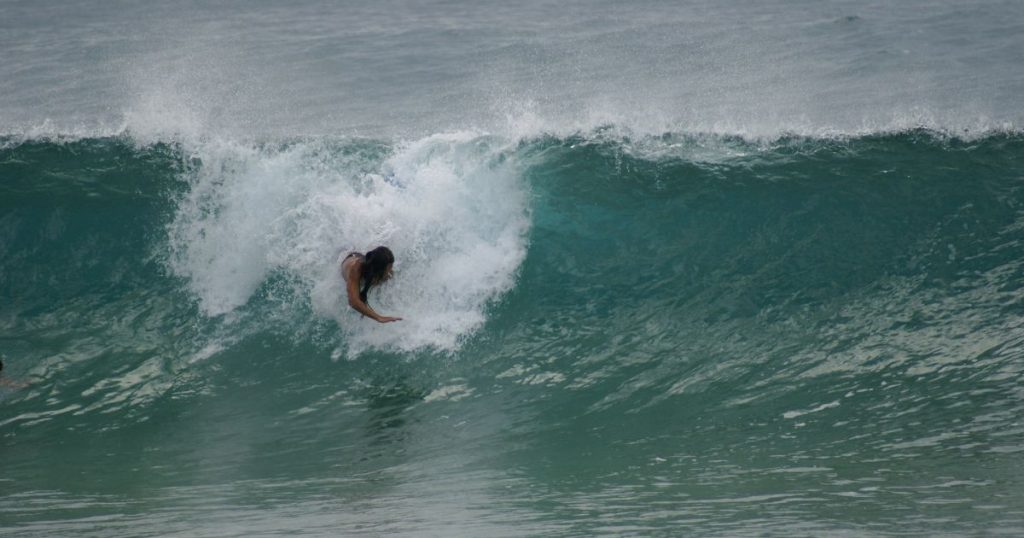
I’ve bodysurfed my whole life, and I still can’t explain the feeling to someone who hasn’t tried it. No board, no fins, just you and a wave — there’s nothing else like it in the ocean.
Body surfing is the oldest form of wave riding on the planet, and in my opinion, still the best. If you’ve ever been swept along by a wave and felt that rush, you already understand why.
This guide covers everything you need to know to get started — what bodysurfing actually is, how to catch your first waves, and what (little) gear you might want along the way.
What Is Body Surfing?
Bodysurfing is riding waves using only your body. No board, no handplane, no fins — just your body angle, your arms, and your timing.
It’s the purest form of surfing there is. Ancient Hawaiians and Polynesians were doing it thousands of years before anyone thought to strap a plank under their feet. In many ways, everything that came after — surfing, bodyboarding, SUP — is just bodysurfing with extra steps.
At its most basic, all you need is a swimsuit and a wave. At a more advanced level, some bodysurfers bring fins and handplanes into the mix — and there’s nothing wrong with that. But the soul of the sport doesn’t need any of it.
How Does Bodysurfing Work?
The basic principle is simple: position yourself in the water, time the wave, and use your body angle and swimming momentum to drop in and ride it toward shore.
Here’s how it breaks down:
1. Positioning
Wade or swim out to where the waves are breaking. For beginners, small shore break waves of one to two feet are ideal. You want to be in chest-to-shoulder-deep water where waves are just beginning to break.
2. Reading the Wave
Watch for a wave that’s building and about to peak. You’re looking for the highest point — where it will break first. Position yourself just ahead of it and get ready.
3. The Takeoff
As the wave approaches, start swimming hard toward shore. Timing is everything — too early, and it passes under you, too late, and it breaks on top of you. The goal is to match the wave’s speed just as it starts to break.
4. The Ride
Once the wave picks you up, extend one arm forward and angle your body slightly downward. This helps you plane across the surface and ride the wave rather than being pushed straight to shore. That extended arm is your rudder — use it.
Bodysurfing vs Bodyboarding — What’s the Difference?
This comes up a lot. Here’s the simple version:
Bodysurfing — no equipment, you ride the wave with your body only.
Bodyboarding — you lie on a small foam board to ride the wave.
Bodyboarding is easier to learn because the board gives you flotation and speed. Bodysurfing has a steeper learning curve, but for my money, there’s no comparison — when a wave picks you up with nothing between you and the water, that’s something a bodyboard can never replicate.
That said, plenty of people do both and love both. No judgment here.
What Equipment Do You Need?
Honestly? Nothing. That’s the beauty of it.
Your body is the equipment. I’ve caught thousands of waves with nothing but board shorts and a decent swim. If you’re just starting out, don’t spend a cent — get in the water and learn to read waves first.
That said, a pair of short-blade swim fins will help you catch waves in weaker surf, especially if you’re still building your swimming fitness. A handplane can add speed and control once you’ve got the basics sorted. I use them occasionally, but always find myself going back to hands only.
Start with nothing. Add gear later if you feel like it — or don’t.
Is Bodysurfing Hard to Learn?
Anyone who’s a confident swimmer can bodysurf. Catching your first wave can happen in a single session if the conditions are right. Riding the face of a wave, controlling your line, and handling bigger surf — that takes time.
The most important thing isn’t technique, it’s ocean awareness. Understanding how waves form, where they break, and how to move safely in surf will take you further than any tip I can give you. Spend time watching before you swim. The ocean will teach you.
Where Can You Bodysurf?
Anywhere with a shore break. That’s the other great thing about bodysurfing — you don’t need a perfect point break or a boat to get out to the lineup. If there are waves breaking near the beach, you’ve got a bodysurfing spot.
Some of the world’s most famous breaks include The Wedge in Newport Beach, California, Pipeline on Oahu’s North Shore, Cronulla Beach in Sydney, and Playa Zicatela in Mexico. But your local beach is just as good a place to start.
Bodysurfing Tips for Beginners
Start small. Learn on knee-to-waist-high waves before attempting anything bigger. The ocean will still be there when you’re ready for more.
Watch before you swim. Spend ten minutes on the sand studying where waves break and where they don’t. That knowledge is worth more than any gear.
Use the Superman position. One arm extended forward helps you plane and steer. It feels awkward at first – stick with it.
Protect your neck. Always tuck your chin and cover your head when wiping out. Wipeouts are part of the deal, but neck injuries don’t have to be.
Go with a friend. Ocean swimming is always safer in company.
Ready to Get Started?
Bodysurfing doesn’t ask much of you — just a willingness to get in the water and let the ocean do its thing. Start small, be patient, and pay attention to the waves. Everything else follows.
Explore the rest of Bodysurf Guide for gear recommendations, technique guides, and the best bodysurfing beaches around the world.
Frequently Asked Questions
What is body surfing?
Body surfing is riding waves using only your body, no board, no handplane, no fins. Just body angle, arms, and timing. It’s considered the purest and oldest form of wave riding, dating back to ancient Hawaiians and Polynesians.
Do you need equipment to bodysurf?
No. All you really need is a swimsuit and a wave. Some bodysurfers add short-blade swim fins or a handplane once they’ve got the basics down, but the sport doesn’t require any gear to get started.
What’s the difference between bodysurfing and bodyboarding?
Bodysurfing uses no equipment; you ride the wave with your body only. Bodyboarding involves lying on a small foam board, which gives you flotation and speed, making it easier to learn. Bodysurfing has a steeper learning curve but offers a more direct connection to the wave.
Is bodysurfing hard to learn?
Any confident swimmer can catch their first wave in a single session under the right conditions. Riding the face of a wave and handling bigger surf takes longer to master. Ocean awareness matters more than technique for beginners.
Where can you bodysurf?
Anywhere with a shore break. Famous spots include The Wedge in Newport Beach, Pipeline on Oahu’s North Shore, Cronulla Beach in Sydney, and Playa Zicatela in Mexico, but a local beach with breaking waves works just as well.
What’s the most important tip for beginners?
Watch before you swim. Spending time studying where waves break, starting on small waves, using the “Superman position” with one arm extended, and protecting your neck during wipeouts are the key fundamentals covered in the guide.